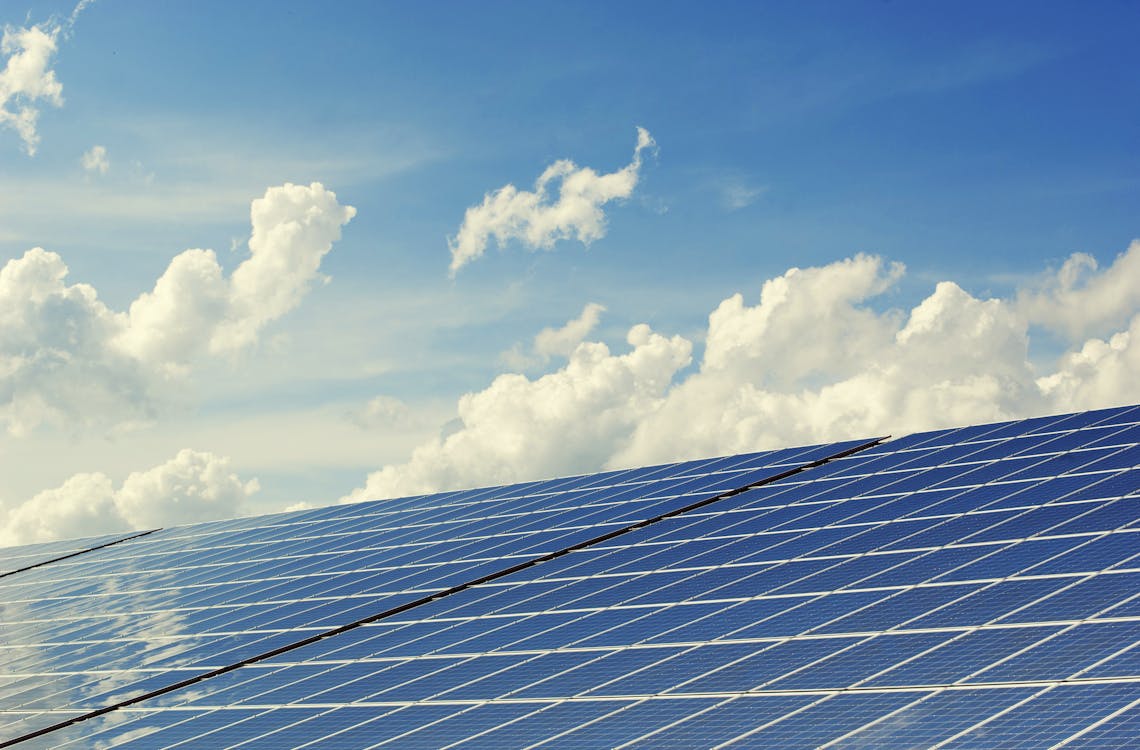
UK Government Grants for Solar Panel Scheme
The UK schemes that can help homeowners pay for solar panels, who runs each one and who qualifies. This independent guide explains how the funding works, eligibility criteria, and how to access these grants.
Why Look Into Solar Grants?
- See which schemes can pay for solar in your nation
- ECO4 runs until 31 December 2026
- 0% VAT on installed solar until 31 March 2027
- Free eligibility check; we reply by email
Understanding UK Government Solar Panel Grants
The UK government has established several schemes to promote the adoption of solar energy among homeowners. These initiatives aim to reduce carbon emissions, tackle fuel poverty, and help the nation achieve its net-zero targets by 2050.
As energy costs continue to rise, these solar panel grant schemes have become increasingly important for British homeowners looking to reduce their bills while contributing to environmental sustainability. Let's explore the main government schemes currently available.
The Energy Company Obligation (ECO4)
The ECO4 scheme is the cornerstone of the UK's approach to funding domestic renewable energy improvements. Running from April 2022 to 31 December 2026, this program requires large energy suppliers to fund energy efficiency improvements in British homes, with a focus on vulnerable households and those in fuel poverty.
Key features of the ECO4 scheme include:
- Focus on Low-Income Households: Prioritizes households receiving certain benefits or meeting low-income thresholds
- Whole-House Approach: Aims to improve overall energy efficiency, often combining solar panels with other measures like insulation
- Property Eligibility: Targets homes with poor energy efficiency ratings (EPC D or below)
- Funding Level: Not a grant: the supplier decides what to fund and you may be asked to contribute
Smart Export Guarantee (SEG)
While not a direct grant, the Smart Export Guarantee is an important part of the UK's solar incentive framework. Introduced in January 2020, this scheme requires energy suppliers with over 150,000 customers to pay solar panel owners for excess electricity exported to the grid.
The SEG provides ongoing financial benefits to solar panel owners:
- Payment for Excess Energy: Get paid for surplus electricity your solar panels generate
- Variable Rates: Different suppliers offer different rates, allowing you to shop around for the best deal
- No Government Funding: Payments come directly from energy suppliers
- Compatibility: Works alongside other grant schemes like ECO4
Regional and Devolved Administration Schemes
In addition to nationwide programs, residents in different UK nations may have access to region-specific solar funding:
- Home Energy Scotland: Lists a £5,000 loan for hybrid solar PV (PV-T) in Scotland; no grant for standard solar panels
- Nest Scheme: The Welsh Government's home energy efficiency scheme; check its current measures on the Welsh Government site
- Northern Ireland: the Boiler Replacement Scheme is closed, and ECO4 and the Warm Homes: Local Grant do not apply
Why These Schemes Matter
Government solar panel schemes make renewable energy accessible to all homeowners, not just the wealthy. By reducing the financial barrier to installation, these initiatives help create a more sustainable and equitable energy future for the UK while protecting vulnerable households from rising energy costs.
Available UK Government Solar Panel Grants
Find the funding options available to help you install solar panels on your UK home.
ECO4 Scheme
The Energy Company Obligation (ECO4) is funded by the larger energy suppliers and administered by Ofgem. It runs until 31 December 2026 and can fund solar panels for eligible low-income households in Great Britain.
Eligibility Criteria:
- You might be eligible if someone gets Universal Credit, Pension Credit, Child Benefit, Housing Benefit or another qualifying benefit
- You live in a property with an EPC rating of D or below
- You own your home or have permission from your landlord
Smart Export Guarantee (SEG)
While not a direct grant, the SEG requires energy suppliers to pay households for excess renewable electricity they export back to the grid, providing ongoing income from your solar panels.
Eligibility Criteria:
- You have installed solar PV panels up to 5MW in size
- Your installation is MCS certified
- You have a smart meter or export meter to measure electricity exported
Home Energy Scotland Loan
Home Energy Scotland's grant and loan table lists a £5,000 loan for hybrid solar PV (PV-T) and no grant for standard solar panels; funding is subject to availability.
Eligibility Criteria:
- You must be a homeowner in Scotland
- The property must be your primary residence
- You must use approved installers
Boiler Upgrade Scheme
The Boiler Upgrade Scheme does not pay for solar panels. It gives £7,500 towards an air or ground source heat pump in England and Wales (£9,000 until 31 March 2027 where an off-gas-grid home replaces oil or LPG heating).
Eligibility Criteria:
- Property in England or Wales
- Replacing fossil fuel heating with a heat pump
- You own the property (including a rented-out home)
The UK's Solar Panel Grant Landscape
Understanding how various government schemes work together to support solar panel adoption across different regions and household types.
Who Gets Funding?
Priority groups for UK solar panel grants
Low-income households - Families with limited financial resources, often receiving government benefits
Vulnerable residents - Elderly individuals, those with disabilities, or households with young children
Energy-inefficient homes - Properties with poor EPC ratings that would benefit most from energy improvements
Fuel poverty households - Families spending a high percentage of income on energy bills
Regional focus areas - Certain regions with specific environmental or economic challenges
Funding Sources
Who pays for UK solar panel grants
Energy suppliers - Large energy companies fund the ECO4 scheme as part of their regulatory obligations
Department for Energy Security & Net Zero - Oversees and contributes to various energy efficiency initiatives
Devolved administrations - Scottish, Welsh, and Northern Irish governments fund regional schemes
Local authorities - Some councils offer additional grants or supplements for local residents
Policy Objectives
Why the UK funds solar panel grants
Carbon reduction - Supporting the UK's legally binding commitment to net-zero emissions by 2050
Fuel poverty reduction - Helping vulnerable households escape the cycle of high energy costs
Energy independence - Reducing the UK's reliance on imported energy and fossil fuels
Green economy growth - Creating jobs and economic opportunities in the renewable energy sector
Energy grid modernization - Supporting the transition to a smarter, more flexible energy system
How It Works
The typical four-step route from an eligibility check to a government-funded solar installation.
Check Eligibility
Complete our simple online form to check if you qualify for government grants based on your property and personal circumstances.
Property Survey
If a scheme goes ahead, its installer normally surveys the roof to check it is suitable before any work is agreed.
Grant Application
For schemes such as ECO4 the application goes through an obligated energy supplier or its approved installer, who prepares the paperwork with you.
Professional Installation
The MCS-certified installer you choose will fit your new solar panel system, usually in one to two days and with minimal disruption to your home.
The Future of UK Solar Panel Grant Schemes
The UK's commitment to reaching net-zero carbon emissions by 2050 means that support for solar energy is likely to continue evolving. Understanding the direction of government policy can help homeowners make informed decisions about when to apply for solar panel grants.
Current Policy Direction
The UK government has demonstrated a clear commitment to supporting residential solar power, with the ECO4 scheme running until 31 December 2026. This indicates continued support for vulnerable households and those in fuel poverty to access renewable energy solutions.
Several factors are shaping the future of solar panel grants in the UK:
- Increasing Climate Targets: As the UK works toward its 2050 net-zero goal, support for renewable energy technologies is likely to strengthen.
- Energy Price Volatility: Recent energy price fluctuations have highlighted the importance of energy independence, potentially leading to expanded solar incentives.
- Technological Improvements: As solar technology becomes more efficient and costs continue to fall, grant schemes may evolve to support more innovative solutions.
- Focus on Energy Storage: Future schemes may increasingly support combined solar and battery storage systems to maximize the value of renewable energy.
Expected Developments
Based on current trends and policy statements, we anticipate several developments in UK solar panel grant schemes:
- Continuation of ECO Scheme: ECO4 ends on 31 December 2026. No successor scheme is confirmed on an official page; check Ofgem before relying on one.
- Integration with Heat Decarbonization: Future schemes may increasingly link solar panel grants with heat pump and home insulation incentives for a whole-house approach.
- Enhanced Smart Export Guarantee: The SEG scheme may be strengthened to provide better export rates, encouraging more households to adopt solar technology.
- Local Energy Markets: New schemes may support community energy projects and local energy trading, allowing homeowners to share solar power with neighbors.
Recommendations for Homeowners
Given the likely future direction of UK solar panel grant schemes, we recommend homeowners consider the following:
- Apply Now if Eligible: ECO4 ends on 31 December 2026, so if you might qualify, check with an energy supplier or installer before then.
- Consider Future-Proofing: When installing solar panels, consider systems that can be easily integrated with battery storage or other renewable technologies in the future.
- Monitor Policy Developments: Stay informed about changes to grant schemes and new incentives that may become available.
- Explore Local Initiatives: In addition to national schemes, check if your local authority offers supplementary grants or incentives for solar installation.
Act Now for Maximum Benefit
ECO4 ends on 31 December 2026 and the 0% VAT rate on installed solar runs to 31 March 2027, so check dates on the official pages before you plan around them.
Check Your Eligibility
Answer a few quick questions to see which solar power grants and schemes you might be eligible for in the UK.
Thank You!
Thanks, we have your answers. We reply by email. Each scheme decides who qualifies, so nothing here confirms eligibility. This site is an independent guide, not a government website.
Explore Available GrantsFrequently Asked Questions
Find answers to common questions about government grants for solar panels.
Who is eligible for government solar panel grants in the UK?
Eligibility varies by scheme. Generally, homeowners with properties rated EPC D or below may qualify for ECO4. Other factors include receiving certain benefits (like Universal Credit, Pension Credit), household income, and property type. In England, the Warm Homes: Local Grant is run by councils for homes rated EPC D to G where household income is usually £36,000 or less. The eligibility checker gives an indication; each scheme makes the decision.
How much money could I save with solar panels?
Savings depend on how much of the electricity you use at home, the size of the system and your tariff. Each unit you use yourself avoids buying it at the capped rate (26.32p per kWh, GB average, 1 October to 31 December 2026), and the Smart Export Guarantee pays for what you export; the better fixed export rates are around 12 to 13p per kWh.
How much do solar panels cost after government grants?
ECO4 (until 31 December 2026) is not a grant: the energy supplier decides which measures to fund and how much, and you may be asked to contribute. In England, the Warm Homes: Local Grant is different: occupants do not pay for the measures it funds. If you do not qualify for either, installed solar panels and batteries carry 0% VAT in Great Britain until 31 March 2027; written quotes from MCS-certified installers give the actual price.
How long does the installation process take?
The fitting itself usually takes one or two days. How long a grant takes depends on the scheme, and on your council or energy supplier; ask them for a timeline before you commit.
Do solar panels work effectively in the UK climate?
Yes, solar panels work efficiently in the UK climate. They generate electricity from daylight, not just direct sunlight. Modern panels are designed to perform well even in cloudy or overcast conditions, which are common in the UK. While output is higher in summer months, panels still generate significant electricity year-round, and PVGIS puts yield in Midlands cities at about 968 to 1,017 kWh per kWp a year.
What maintenance do solar panels require?
Solar panels require minimal maintenance. Occasional cleaning (1-2 times per year) to remove dust, leaves, or bird droppings helps maintain efficiency. Rain naturally cleans panels in most cases. Systems typically include monitoring software to track performance. Most installations come with 25-30 year warranties, though inverters may need replacement after 10-15 years. Annual professional inspections are recommended but not essential.
Still Have Questions?
Use the eligibility checker to start; we reply by email. For a scheme's own rules, its official page is the final word.
Check Your EligibilityReady to Save Money on Your Energy Bills?
Check which schemes may apply to your home. The checker takes a few minutes and we reply by email.
On Solar to 31 Mar 2027
System Lifespan
Eligibility Check